Understand the strategic motivation behind every corporate investment.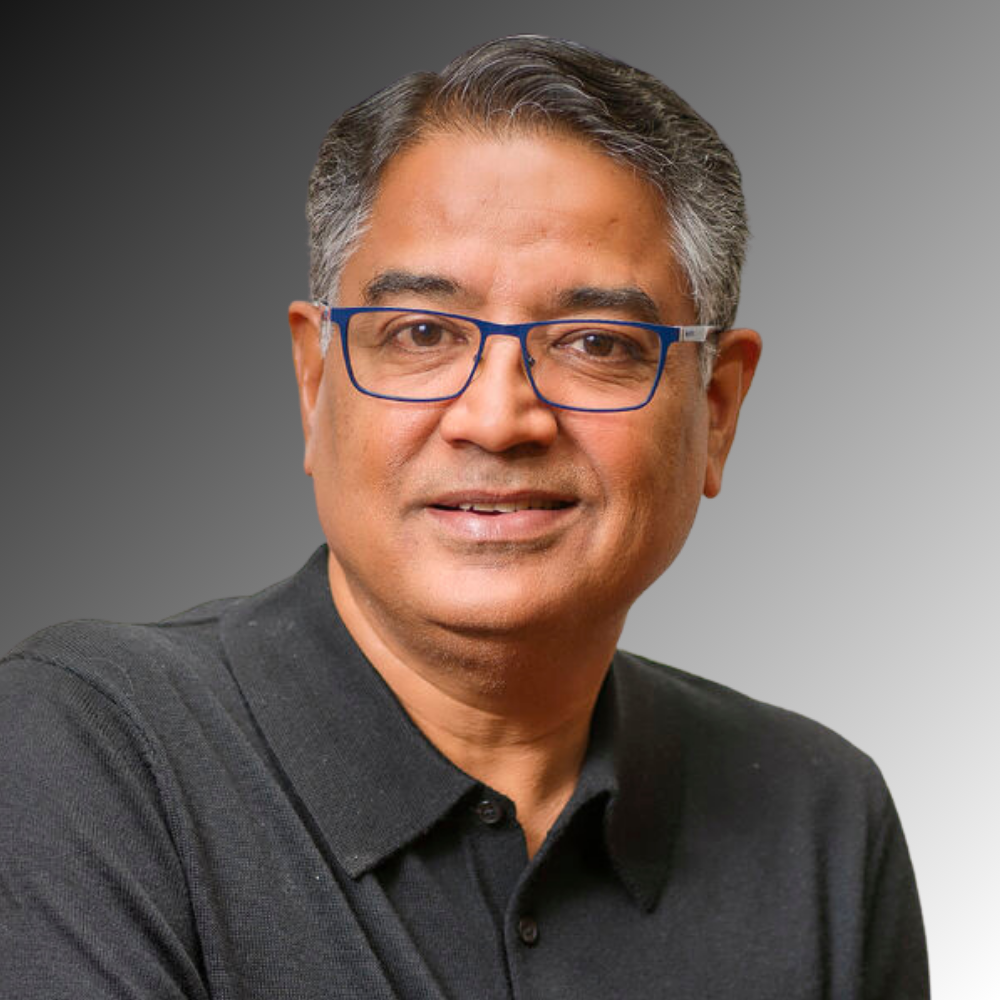


Growing the Pizza: Sriram Viswanathan on Building Ecosystems, Not Just Companies
Corporate Venturing Insider Episode #127 | Interview with Sriram Viswanathan | Interviewed July 24th, 2026
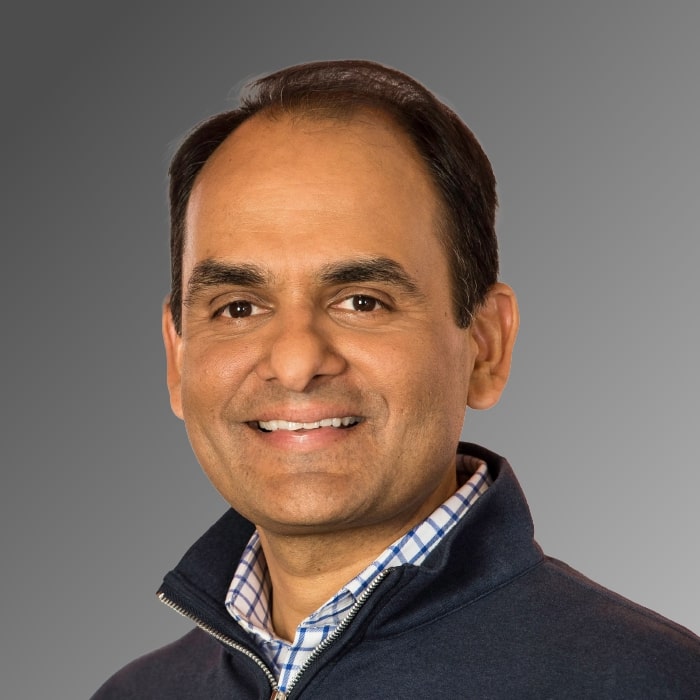
When Sriram Viswanathan joined Intel, the company was not simply building chips. It was building a platform and an ecosystem around it. That experience helped shape a career spanning two decades at Intel, the early days of Intel Capital, and his current role as Founding Managing Partner at Celesta Capital. In a recent Corporate Venturing Insider conversation with Nicolas Sauvage, Sriram reflected on what those chapters taught him about strategic investing: technology matters, but technology alone rarely wins.
Learning from Intel’s Builders
Sriram began at Intel in technical marketing, supporting the executive offices of Gordon Moore, Andy Grove, and Craig Barrett. He later joined the original corporate business development team led by Les Vadasz, Intel employee number three. That group invested in early-stage companies to strengthen the wider market around Intel’s architecture and ultimately evolved into Intel Capital.
Grove’s influence remains especially vivid. Sriram recalled his ability to cut to the heart of a problem and one enduring instruction: “Let chaos reign, and rein in the chaos.” The phrase captures a discipline that still guides Sriram—allow competing ideas and evidence to surface before committing to a strategy, then act decisively.
Growing the Pizza
Sriram explained Intel Capital’s strategic mission through a pizza analogy. A corporate investor can help its parent capture a larger share of an existing pizza, expand the pizza by growing the addressable market, or create entirely new pizzas—markets that do not yet exist. If a corporate venture program does none of those things, he argued, “then you’re just a pure financial investor.” There is nothing wrong with that, but it should not be confused with strategic investing.
Intel’s $150 million Wi-Fi Fund put that ecosystem logic into practice. Sriram ran the fund as Intel prepared to launch Centrino, which made Wi-Fi native to mobile computing. The technology needed more than a capable chip: roaming, authentication, security, and settlement infrastructure all had to exist before users could connect seamlessly. Intel invested in those missing pieces so its core platform could succeed.
WiMAX delivered the opposite lesson. Intel believed strongly in the technology but underestimated the telecom carriers whose cooperation it needed. Those incumbents feared losing control and becoming commoditized connectivity providers. Sriram’s conclusion was blunt: Intel “had the trees right, but it lost the forest.” For CVCs, the takeaway is not simply to back superior technology, but to understand the incentives of every participant required for adoption.
From Corporate VC to Celesta
After leaving Intel in 2012, Sriram founded IndusAge. That activity later combined with Walden Riverwood Ventures, formed by Michael Marks and Lip-Bu Tan with Nick Brathwaite, to become Celesta Capital. The connection now runs full circle: Lip-Bu, one of Celesta’s founders, is Intel’s CEO.
At Celesta, Sriram applies three filters to investments. First, the company should possess defensible technology or intellectual property that can scale. Second, the technology must solve a real problem through a compelling use case. Third, the economics must support strong, nonlinear margin growth. “No technology by itself is going to be widely successful,” he cautioned. The lesson from WiMAX remains embedded in how he invests.
A Golden Age—With Discipline
Sriram believes this is “the golden age for corporate VC.” Large technology companies have broader platforms, strong cash generation, and unmatched visibility into emerging markets. Yet the pizza test still matters: a corporate venture group should be clear about whether it is strengthening its current position, expanding an ecosystem, or opening a new market. Scale and capital do not substitute for strategic purpose.
Building India’s Deep-Tech Ecosystem
Sriram is now extending that thinking to India through the India Deep Tech Alliance (IDTA). He sees enormous entrepreneurial ambition, but he is careful not to confuse abundant capital with a mature deep-tech market. “Just throwing money at the problem is not going to solve it,” he said. Talent, technology, execution, management capability, co-investors, corporations, and supportive regulation must develop together.
IDTA brings financial investors together with companies including NVIDIA, Qualcomm, Cisco, Lam Research, and Applied Materials to address those ecosystem-level constraints. Sriram compares its ambition to NASSCOM’s role in helping India’s IT services industry grow, while calling the alliance “necessary, not sufficient.” Individual investors must still choose where they can contribute and remain disciplined.
Across Intel, Celesta, and IDTA, the principle is consistent: capital can help a company advance, but durable innovation requires the surrounding ecosystem to advance with it. The best investors do more than pick a promising slice. They help grow the pizza.