Align early investments toward achievable wins. Early financial credibility creates the trust and runway needed to refine strategy, absorb mistakes, and mature as a long-term venture platform.


The Challenges Facing Corporate Venturing and GCV Leadership with Bill Taranto
Following last week’s conversation with Arvind Purushotham, Corporate Venturing Insider continues its look at leadership transition within the Global Corporate Venturing (GCV) Leadership Society with Nicolas Sauvage’s discussion with Bill Taranto, the other outgoing co-chair. Recorded the day after Arvind’s interview, the conversation finds Taranto offering a complementary—and deeply reflective—set of lessons for the incoming chair and the broader CVC community.
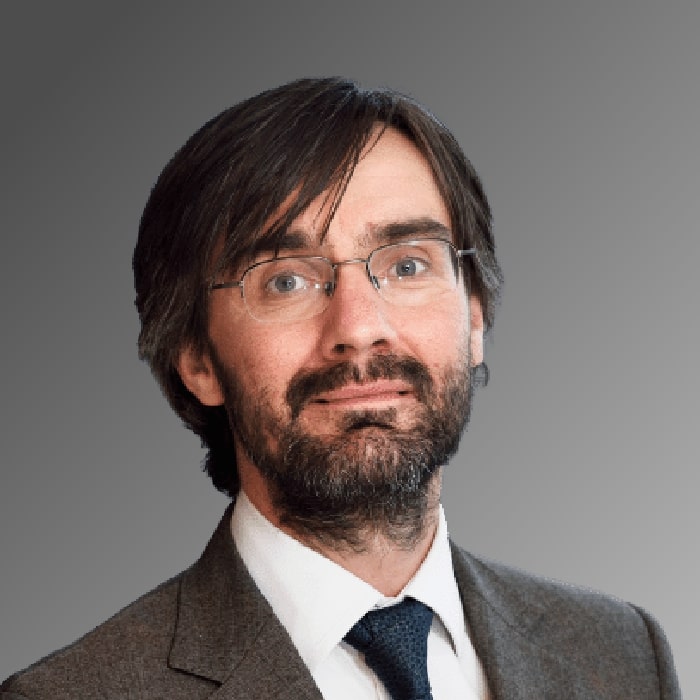
Taranto is the founder of the Merck Global Health Innovation Fund and a former Johnson & Johnson venture leader, with a career in corporate venturing that began by accident more than three decades ago. Sixteen years ago, he was tapped to build Merck’s CVC platform from the ground up. His perspective arrives as GCV releases its World of Corporate Venturing 2026 report, reflecting an ecosystem that has grown to more than 3,000 active corporate venture groups worldwide.
Together, the conversations with Purushotham and Taranto form a rare two-part reflection from leaders who have helped guide corporate venturing through a period of expansion, correction, and institutional maturity.
Falling into Corporate Venturing—and Staying
Like many CVC leaders, Bill Taranto entered corporate venturing by accident—only earlier than most. After graduating with a marketing degree in 1985, he began his career in banking before joining Johnson & Johnson’s early corporate venture unit, where he spent nearly two decades investing in the pharmaceutical ecosystem. That experience proved formative when Merck approached him in 2010.
“They didn’t even have a therapeutic fund,” Taranto recalls. “They kind of handed me a whiteboard.”
For Taranto, it was a rare opportunity: to design a corporate venture fund from first principles, informed by decades of experience—and past mistakes.
Designing for Durability
From the outset, Taranto pushed for structural independence and a clear mandate at Merck’s Global Health Innovation Fund.
“I wanted the money all up front. I wanted to be responsible for the decision-making,” he says. “We wanted experienced venture capital people and the freedom to operate.”
The goal was to build a venture firm that behaved like an institutional fund—lean, decisive, and insulated from corporate friction. This was unusual for the time. Outsourcing non-core functions and maintaining a focused investment thesis allowed the team to operate efficiently.
Sixteen years later, the results speak for themselves. Merck’s venture arm is now one of the longest-running corporate venture funds.
Strategy, Trust, and Buying Time
If there is a single theme that runs through Bill Taranto’s career—and through his advice to incoming GCV Chair Nicolas Sauvage—it is that strategy must be both clear and communicable.
“One of the mistakes I see corporate venture firms make when they first start is they don’t have a well-defined investment strategy, and they don’t have a well-defined execution strategy,” Taranto says. “You can’t be everything to everybody.”
That clarity proved essential as Merck evolved through three CEOs, ten direct bosses, and a fundamental shift from primary care to oncology. “We didn’t change our strategy,” he explains. “What changed was how we articulated it.”
Continuous communication across the organization built trust over time. “The best compliment I ever got was someone saying the executive committee doesn’t wake up worrying about the venture fund,” he says.
At the same time, Taranto acknowledges that venture capital requires room to fail. Early financial wins at Merck—exits within the first three years—helped establish credibility. “You get to make mistakes when you make money,” he notes. “That buys you time to learn and make mistakes.”
GCV as CVCs Institutional Home
Taranto’s emphasis on learning from mistakes and shared experience naturally leads to GCV itself.
“This is our community,” he says. “This is the closest our ecosystem will get to a trade organization.”
Unlike NVCA, which serves institutional venture capital, GCV exists specifically for corporate venture leaders navigating similar tensions between startups, strategy, and the corporate mothership.
“We all have similar problems,” Taranto notes. “We just happen to be in different industries.” For newer CVC leaders, GCV offers peer mentorship and pattern recognition that no internal program can replicate.
Advice for the Incoming Chair
As Nicolas Sauvage prepares to take on a two-year term as Chair of the GCV Leadership Society, Taranto’s advice is pragmatic and deliberately focused.
“You can’t do everything,” he says. “Pick one or two things and deliver on those.”
During his co-chairmanship with Arvind Purushotham, Taranto prioritized expanding the GCV community, particularly among firms operating below the surface.
“There’s a top of the iceberg and a bottom,” Sauvage reflects. “The bottom isn’t bad—it just doesn’t have access.”
Taranto agrees. The challenge, he says, is not convincing firms that community matters, but articulating the value proposition clearly enough to pull them in. This is in addition to what some may be facing with corporate approval to join.
That work remains unfinished, but at the end of the day, GCV is a community of mentors and peers. As Taranto puts it, “We’re all still here. Arvind and I—we’re around. This is how communities last.”